
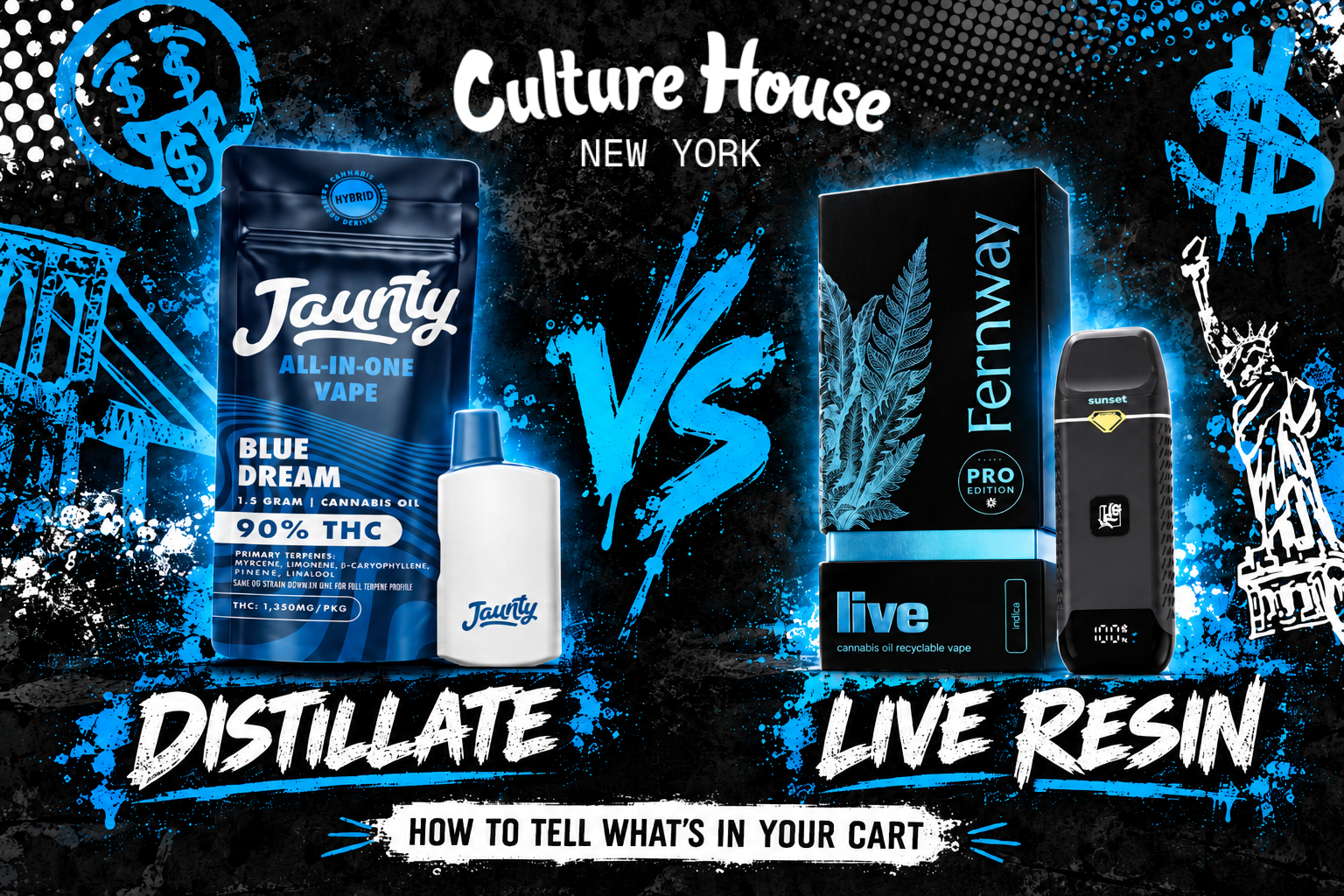
Distillate vs Live Resin: How to Tell What’s in Your Cart
Key Takeaways
- Distillate is refined oil with most natural aroma compounds removed.
- Live resin comes from plants frozen fresh at harvest.
- Freezing helps keep the plant’s original terpene profile.
- Some distillate carts add terpenes back for flavor.
- A New York label links to lab results you can check.
- Neither format is a guarantee. Read the label first.
Introduction
Distillate vs live resin comes down to one thing: how much of the original plant survives processing. Distillate is refined until little aroma is left, while live resin starts with frozen fresh plants to keep it.
That’s why two carts with the same strain name can taste nothing alike. If you want the basics on formats and hardware first, start with our full NYC vape guide.
This guide goes deeper on the oil itself. It’s written for adults 21 and older shopping legally in New York.
Let’s start with how each one gets made.
For use only by persons 21 years of age and older. Keep out of reach of children and pets. If someone accidentally consumes cannabis, contact the Poison Center. Consume responsibly.
Cannabis can be addictive.
Distillate vs Live Resin: What’s the Difference?
Distillate is cannabis oil refined until it’s nearly pure cannabinoids, which strips out most natural aroma compounds. Live resin is extracted from plants frozen right after harvest, which keeps more of the original terpenes. The result is a real difference in flavor and aroma. Processing levels differ just as much.
Terpenes are the aroma compounds that make one strain smell like citrus and another like pine. They’re delicate. Heat, air, and time all wear them down.
The real choice is how much of the plant’s original character you want in your cart.
The making process is where the gap opens up.
How Is Distillate Made?
Distillate starts as a crude extract, usually made with CO2 or ethanol. Producers then distill that extract to separate cannabinoids from everything else.
According to a 2023 review of cannabis product quality, distillate comes from refining crude CO2 or ethanol extract. The same review notes that heavily refined products may get terpenes added back afterward.
That added-back step matters. Some distillate carts use terpenes taken from cannabis. Others use terpenes from other plants. The label and lab report should tell you which.
Distillate has real fans. It’s consistent from batch to batch, and its flavor depends mostly on what gets added.
Live resin takes almost the opposite approach.
How Is Live Resin Made?
Live resin starts with whole plants frozen right after harvest. Producers skip the usual drying and curing. They extract the frozen material, often with hydrocarbon solvents like butane or propane.
Why freeze? Drying and curing cost a plant some of its lighter aroma compounds. Research on how terpenes change after harvest found that monoterpenes drop during drying and curing. Freezing fresh plants helps preserve the original chemical profile.
That’s where the “live” in the name comes from. The goal is oil that smells like the plant did in the field.
Then there are the formats in between.
Where Do Cured Resin, Rosin, and Liquid Diamonds Fit?
You’ll see more than two oil types on a New York menu. Here’s how the common ones compare.
| Type | Starting material | How it’s made | What to expect |
| Distillate | Dried plant extract | Refined by distillation | Even, consistent flavor, often from added terpenes |
| Live resin | Fresh-frozen plants | Solvent extraction, no drying | Aroma closer to the living plant |
| Cured resin | Dried, cured flower | Solvent extraction | Flavor closer to a jar of cured flower |
| Live rosin | Fresh-frozen plants | Pressed with heat and pressure, no solvents | Solventless option with a full aroma |
| Liquid diamonds | Extracted cannabinoids | Crystals suspended in terpene-rich sauce | Thick oil that varies a lot by brand |
The cured resin vs live resin question gets its own section in our concentrates guide. Short version: cured resin starts with dried flower, so its flavor reads more like an aged jar.
Liquid diamonds vs live resin is mostly a texture question. Diamonds are crystals in sauce, while live resin is one smooth extract. Live resin also comes in other textures, including crumble live resin.
You may also see “THCA live resin” online. THCA is the main cannabinoid in raw cannabis, so it’s part of every live resin. In New York’s licensed market, that live resin is adult-use cannabis with a state lab report. Products sold as “THCA” outside licensed dispensaries are often hemp-derived, which is a different category.
Rosin is the solventless outlier. If you’d rather skip solvents, browse our live rosin cartridges.
Labels are how you sort them out.
How Can You Tell What’s Really in Your Cart?
Start with the label, then check the lab report it links to. New York requires product labels to carry a QR code or link to the Certificate of Analysis. That report shows the cannabinoid results and contaminant tests, so you can see what the lab actually found.
New York’s labeling rules also require a terpene profile when a product is marketed for its terpenes. That gives live resin claims something to stand on. Labels must also name any solvent used to make the product.
The state’s guide to reading a Certificate of Analysis walks through each section. Look for the residual solvent test on any hydrocarbon product. Every test should read PASS.
Expert Insight: The Word “Live” Isn’t a Lab Result
A trade review in Cannabis Science and Technology notes that “live resin” gets used loosely across the industry. Some carts sold under the name are distillate with terpenes added back. That isn’t always bad, but you should know what you’re buying. In New York, the fastest check is the Certificate of Analysis linked from the label.
Indica and sativa labels deserve a second look too.
Do Indica and Sativa Labels Matter on a Vape?
Indica and sativa labels tell you less than most people think. A 2021 study in Nature Plants found these labels don’t reflect a plant’s overall genetics. They mostly track a few aroma compounds tied to specific genes.
That’s another point for reading the terpene list. Two “sativa” carts can smell completely different.
We break this down in why indica and sativa labels fall short.
Here’s how to put it all to work at the counter.
Shopping for Live Resin Vapes in NYC
Our Midtown Manhattan store sits at 958 6th Ave, a short walk from Herald Square. Our Greenpoint, Brooklyn store is at 807 Manhattan Ave.
At either counter, ask three things:
- Was this made from fresh-frozen or dried material?
- Were any terpenes added back, and from what source?
- Can I see the Certificate of Analysis?
A good budtender answers all three without hesitation. You can also browse live resin vapes on our menu before you visit. Stock changes often, so check the menu for what’s in today.
Our vape menu includes brands like Jaunty and Fernway. Check each cart’s label for its oil type before you buy.
Frequently Asked Questions
What does live resin mean on a vape label?
Live resin means the oil was extracted from cannabis plants frozen right after harvest instead of dried first. Freezing helps keep more of the plant’s original aroma compounds. Culture House recommends checking the linked Certificate of Analysis to confirm what the lab actually tested in each cart.
Why does live resin cost more than distillate?
Live resin usually costs more because fresh-frozen material needs cold storage and careful, fast handling after harvest. Distillate can be made from dried material in larger batches. Prices vary by brand and size, so Culture House shoppers should check the live menu for current listings.
What makes rosin different from live resin?
Rosin is made by pressing cannabis with heat and pressure, so no chemical solvents are used. Live resin is usually made with hydrocarbon solvents like butane. Live rosin combines both ideas by starting with fresh-frozen plants. Culture House lists live rosin cartridges as their own category.
How can I check what’s in a New York vape cart?
New York vape labels include a QR code or link to the product’s Certificate of Analysis. That report lists cannabinoid results plus contaminant tests, including residual solvents. The New York Office of Cannabis Management publishes a guide explaining each section of the report.
Where can I find live resin vapes in NYC?
Culture House carries live resin vapes in Midtown Manhattan at 958 6th Ave. The Greenpoint, Brooklyn store is at 807 Manhattan Ave. Stock changes often, so the live menu shows what’s available today. Budtenders at both locations can compare carts side by side for you.
The Bottom Line
Distillate vs live resin is really a question about processing. Distillate trades natural aroma for consistency. Live resin aims to keep the plant’s original character, and New York labels let you check the claim.
This guide is for adults 21 and older. Culture House Midtown Manhattan, OCM License No. OCM-CAURD-24-00049.
Concerned about your cannabis use? Contact the New York State HOPEline by texting HOPENY, calling 1-877-8-HOPENY, or visiting oasas.ny.gov/hopeline.
Ready to Compare Them in Person?
Culture House budtenders will set a distillate cart next to a live resin cart. Then they’ll walk you through both labels. Stop by Midtown or Greenpoint, or check the live menu to see what’s in stock today.
